How much of a factory job can you do from a workshop in Hull?

One of the things I find fascinating about these builds is that a decision we make in Hull can make someone’s job easier at a factory miles away. Sometimes it’s as simple as thinking about where a connection goes and whether the person who’ll have to get to it can actually get both hands on it.
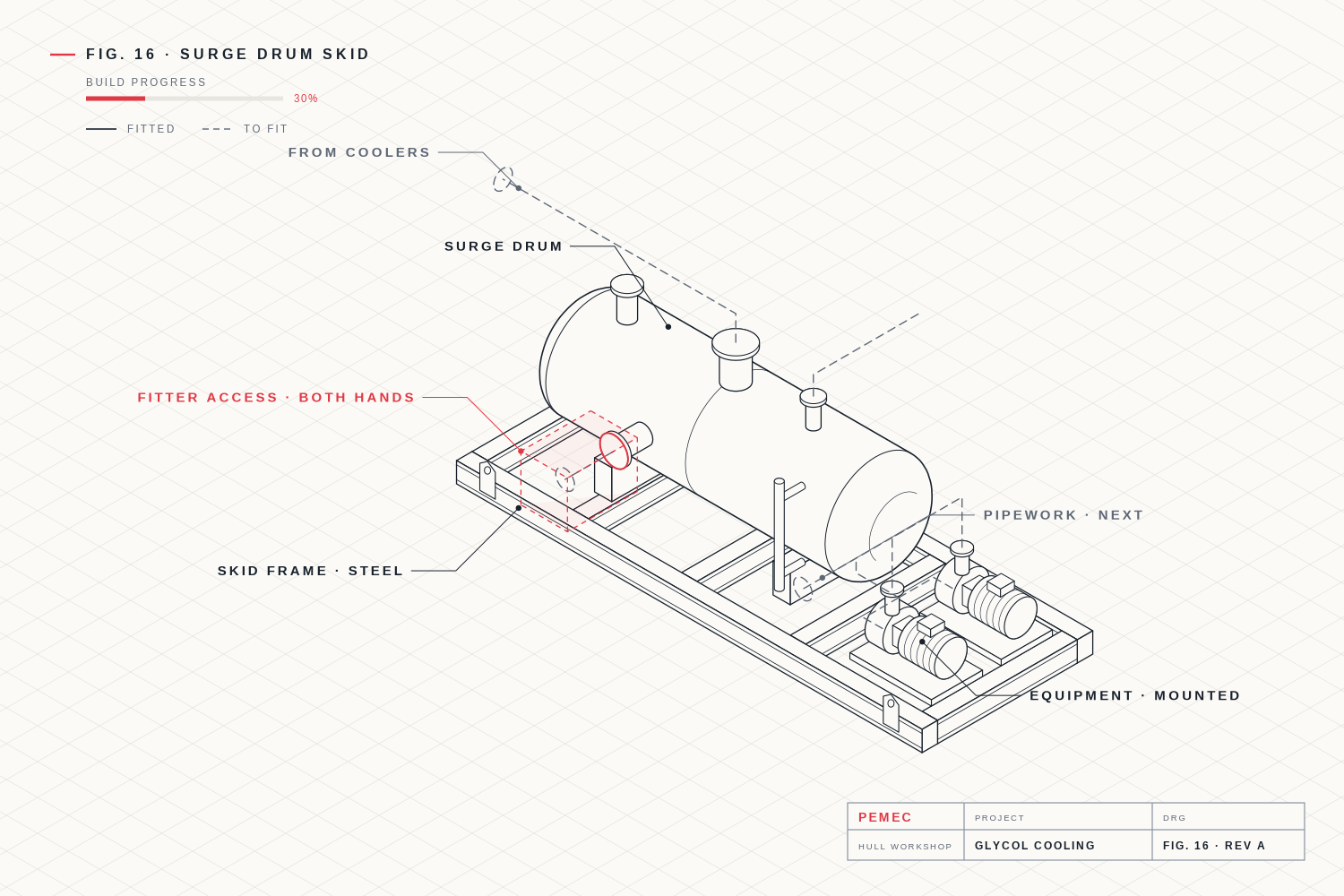
We’ve got a good example in the workshop now. It’s a surge drum skid for an industrial ammonia glycol cooling system. A skid is a steel frame that lets us mount equipment and assemble it as a unit before it goes to site. In this case, the surge drum helps the coolers keep the factory at the temperature it needs to run production.
We’re around 30% through the build. The main equipment is mounted and the pipework is next. There’s a point around now when I like to walk round the frame. You can start to picture the order the team will fit things in, where they’ll need a bit of room to work and what someone will want to reach once the whole thing’s in service. A pipe can look perfectly sensible on a drawing. Then you stand where the fitter will stand and see how much room they’ll have to get it into place.
That’s what I like about the kinds of builds we do at PEMEC. There’s the job the equipment has to do, and then there’s the job of getting it built, moved and fitted where the client needs it. The two are connected from the start. How much can we put together in Hull? What needs to happen at the factory? What will the team need access to when they get there? The earlier we can answer those questions together, the easier it is to plan both halves of the job.
Being able to handle that whole journey is something I’m proud of. We can get involved during planning, fabricate and assemble in our Hull workshop, then manage the work on site. So when we’re deciding how to build something, we can bring in the people who’ll have to install it. They’ll often spot the small practical things that make a big difference once you’re working in someone else’s factory.
For the client, assembling the skid off-site means there’s less to fit once it arrives. In Hull, we can set up the work around the build and give the team room to do it. At the factory, we have to fit around the client’s operations. They’ve got people to organise, space to manage and production to plan. Doing more in our workshop gives them less installation activity to work around on site.
My favourite thing about this particular build is that, once it’s in service, most people at the factory will probably never think about it. They’ll come in, get on with their jobs and expect the process to stay at the temperature they need. There’s a lot of good work in making that feel routine.
For now, we’ve got pipework to fit. I’m looking forward to walking round it again once that starts going in.